
What we grow
Our plantations
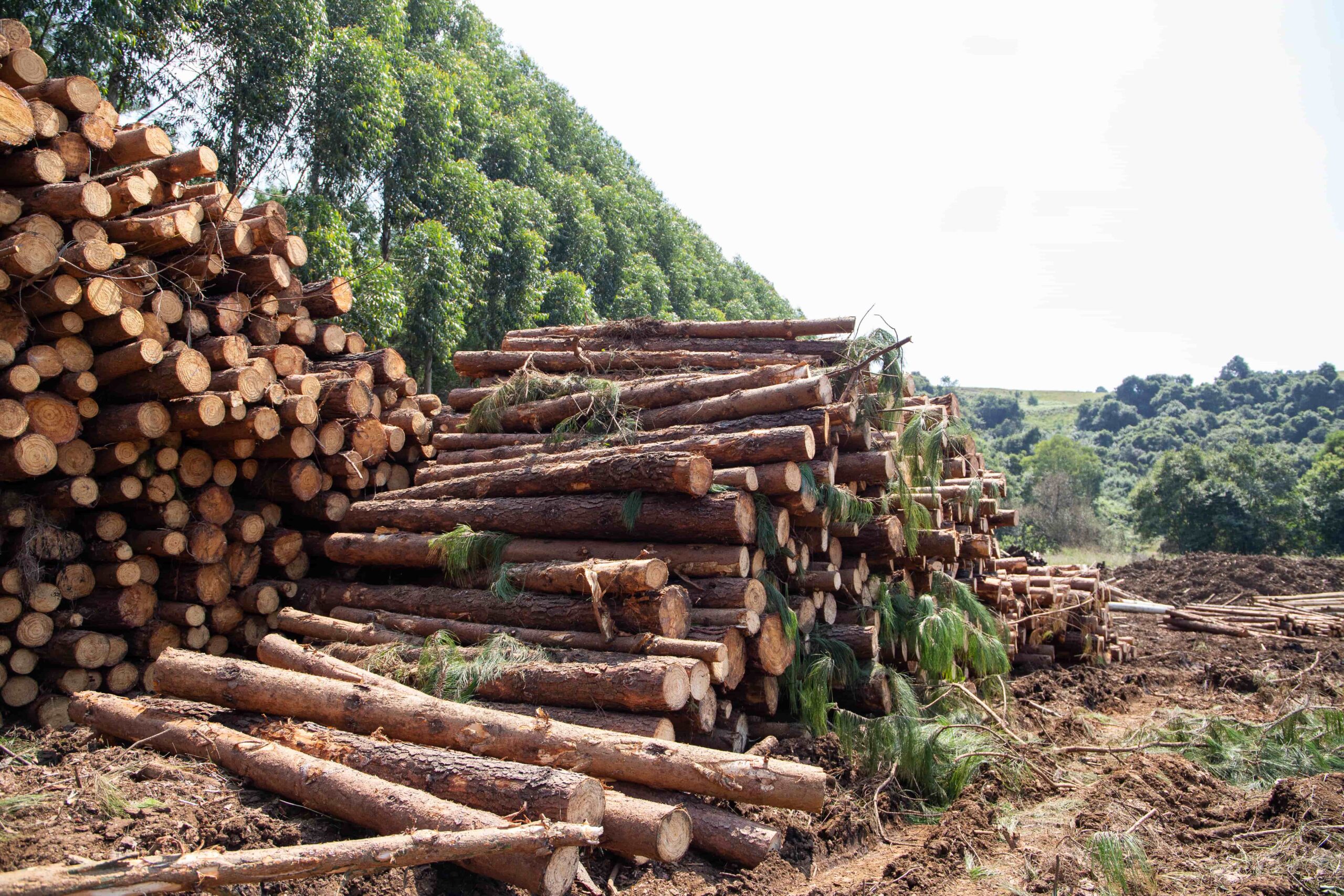
Around 2,400 ha of pine, eucalyptus and wattle across our farms near Baynesfield, Richmond and Dargle.
Right species, right site
Diversified by design
We match each species to the site where it grows best and manage it for the markets it serves. Spreading risk across species and products lets us adapt when demand changes and act quickly on new opportunities.
Pine
About 600 ha, grown mainly for sawtimber.
- Sawlogs
- Thinnings for smaller-dimension timber
Eucalyptus
The balance of our planted area, across several species and clonal hybrids.
- E. grandis and hybrids: poles and sawlogs
- E. smithii: premium pulpwood
- E. smithii leaf for eucalyptus oil
Wattle
About 600 ha, managed for two products.
- Pulpwood
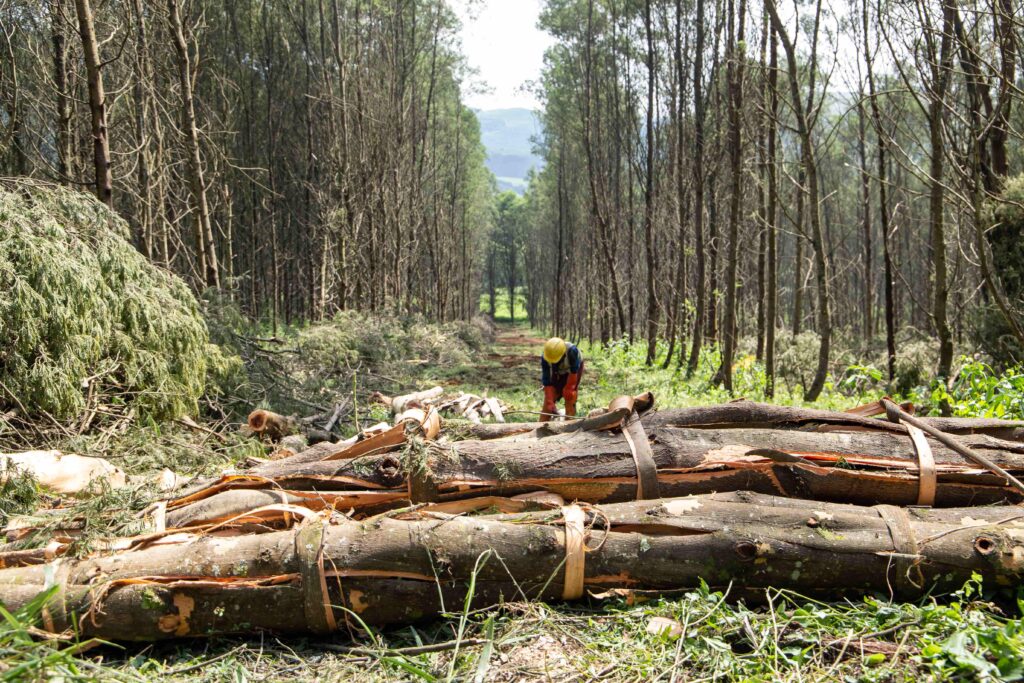
- Bark, hand-stripped for tannin production
Getting the most from every tree
Poles, sawlogs and pulp from one stem
In our pole compartments the harvesting team selects the large trees for transmission poles. The butt end is cut as a sawlog for pallet timber, the middle section is sold as a pole, and the top is cut and stacked for pulp.
E. smithii leaf is harvested from about 18 months, pruning first to one metre and later up to five, and again at clear-fell. The leaf goes to a eucalyptus-oil producer near Richmond.
Products we supply
- Sawlogs (pine and eucalyptus)
- Transmission and building poles
- Pulpwood (eucalyptus and wattle)
- Wattle bark
- Eucalyptus leaf
The farms also run beef cattle on well-managed grassland between the plantations, and grow avocados.