Sustainability
Farming for the long term
Timber can grow forever if it is managed well. Our job is to keep the land as productive for the next generation as it is for this one.
Protecting the land
- Roads, harvesting and chemical use are planned to avoid pollution and soil damage.
- Representative ecosystems – indigenous forest, grassland and riparian zones – are set aside and kept clear of invasive weeds.
- The last weed-infested valleys on the farms are being rehabilitated.
- Unplanted areas are grazed, with careful veld management so they keep their conservation value.
Looking after the soil
- Around 70% of compartments are never burnt after harvesting.
- Where burning is needed we use cool burns that do not damage the soil.
- Brush is stacked neatly to allow easy access and re-establishment.
- We are investigating chipping slash into a protective mulch layer.
Fire prevention
Our teams maintain a network of firebreaks and plant wattle in strategic belts to slow the spread of fire. Cool burns under the canopy of gum compartments reduce fuel loads and improve access.
Harvesting by hand
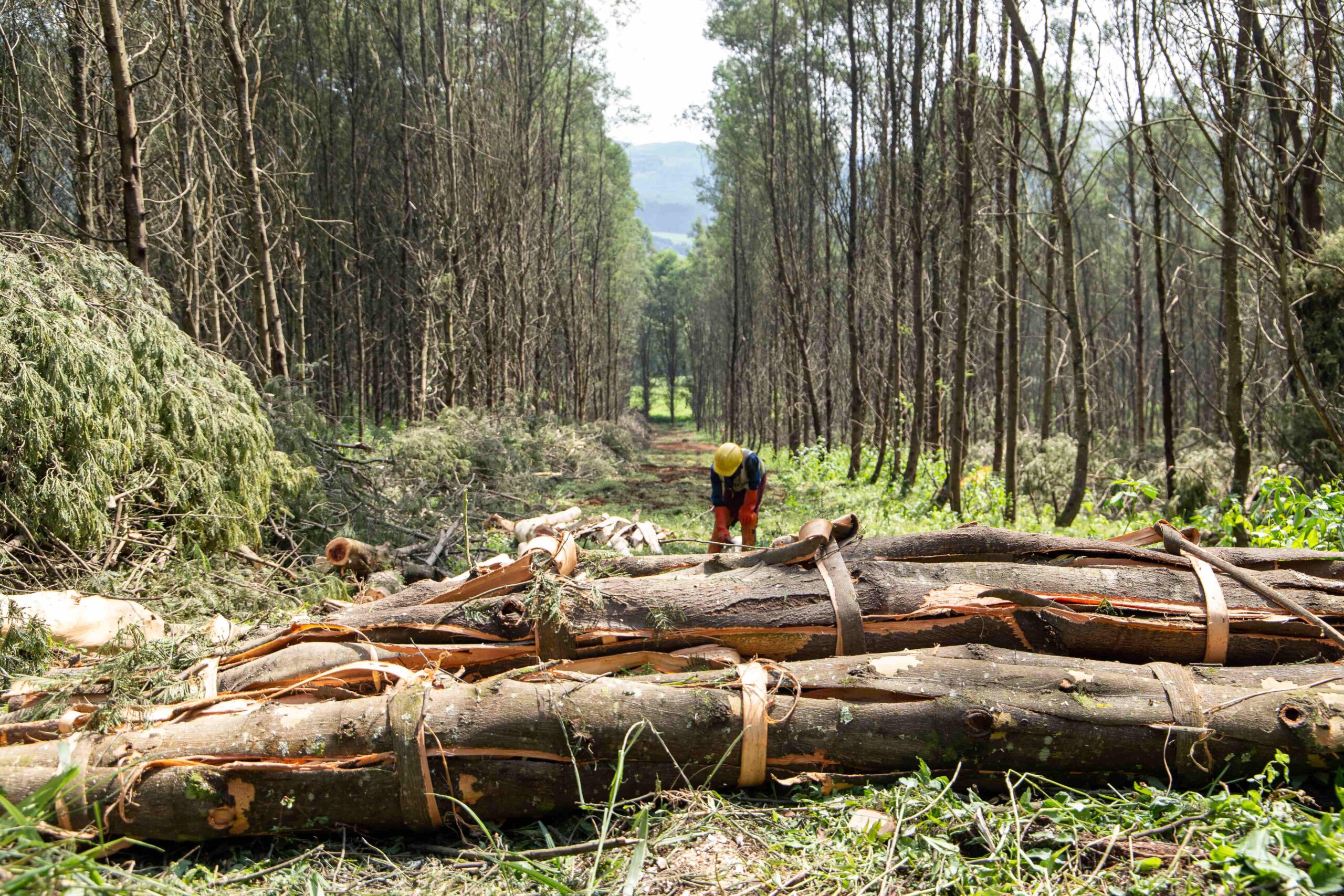
Our farms are steep, so felling, cross-cutting and bark-stripping are done motor-manually by our own in-house teams. Contractors are brought in only when large volumes must reach the market quickly.
These farms are an exceptional example of how the impact of plantation forestry can be managed to ensure sustainability, without compromising on productivity.
NCT Forestry, on awarding Trewirgie’s 2020 Top Commercial Tree Farmer title